Solar Photovoltaic
Pilot Scheme on Building-Integrated Photovoltaics (BIPV)
As global economies progress towards carbon neutrality, the demand for renewable energy development, urban energy conservation and emission reduction continues to rise. In response, the HKSAR Government is taking the lead in applying renewable energy across different buildings and facilities.
The Electrical and Mechanical Services Department (EMSD) has used its Headquarters as the site for the Pilot Scheme on Building-Integrated Photovoltaics (BIPV). This project aims to explore photovoltaic technology applications on the facades of government buildings. The scheme is driven jointly by a cross-discipline team comprising government departments including the EMSD, the Buildings Department, the Architectural Services Department, and the Fire Services Department.
Guided by preliminary assessments of solar irradiance, demonstration potential, and necessary structural modifications, engineering consultants have identified three specific zones within the headquarters for the installation of Cadmium Telluride (CdTe) BIPV panels. The design utilizes panels with varying light transmittance levels (20% and 40%) to balance energy generation with architectural aesthetics. The installation includes the G/F lobby, the 3/F facade, and the 6-7/F facades.
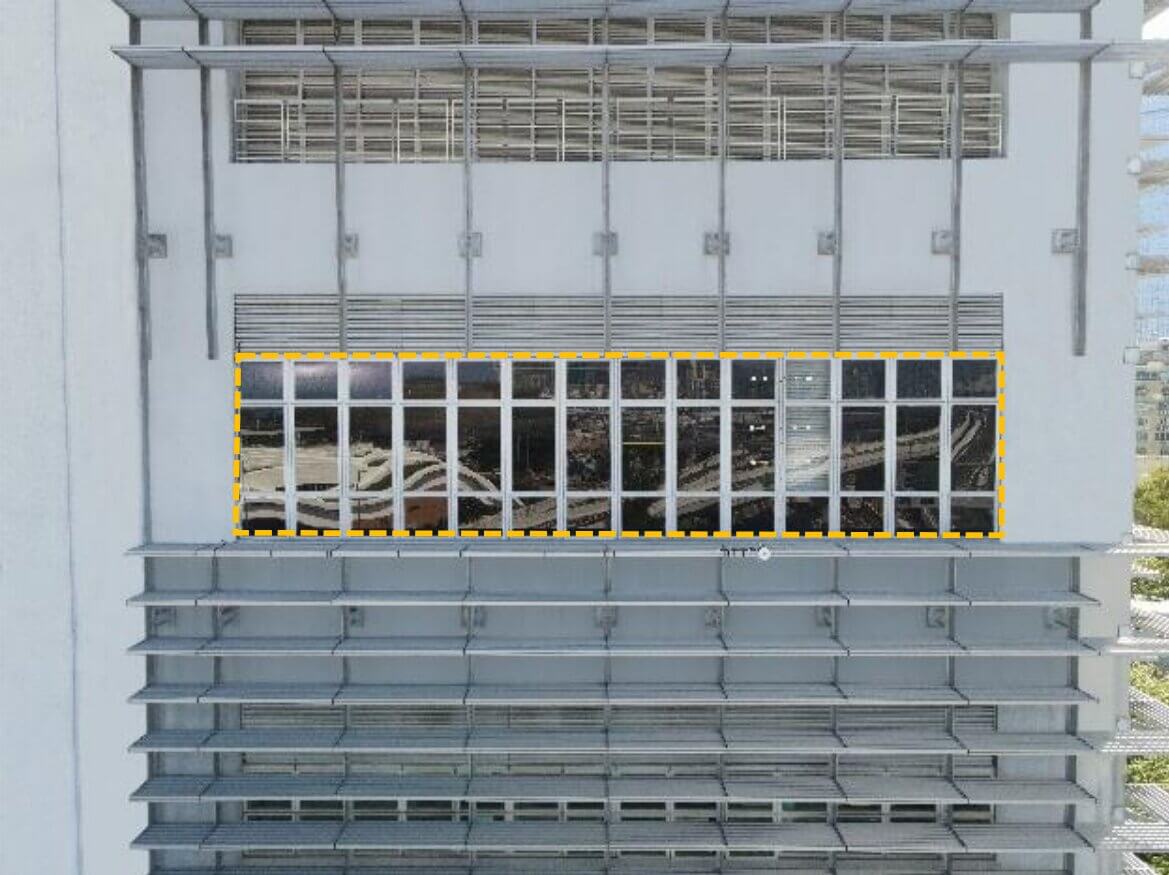
3/F Facades
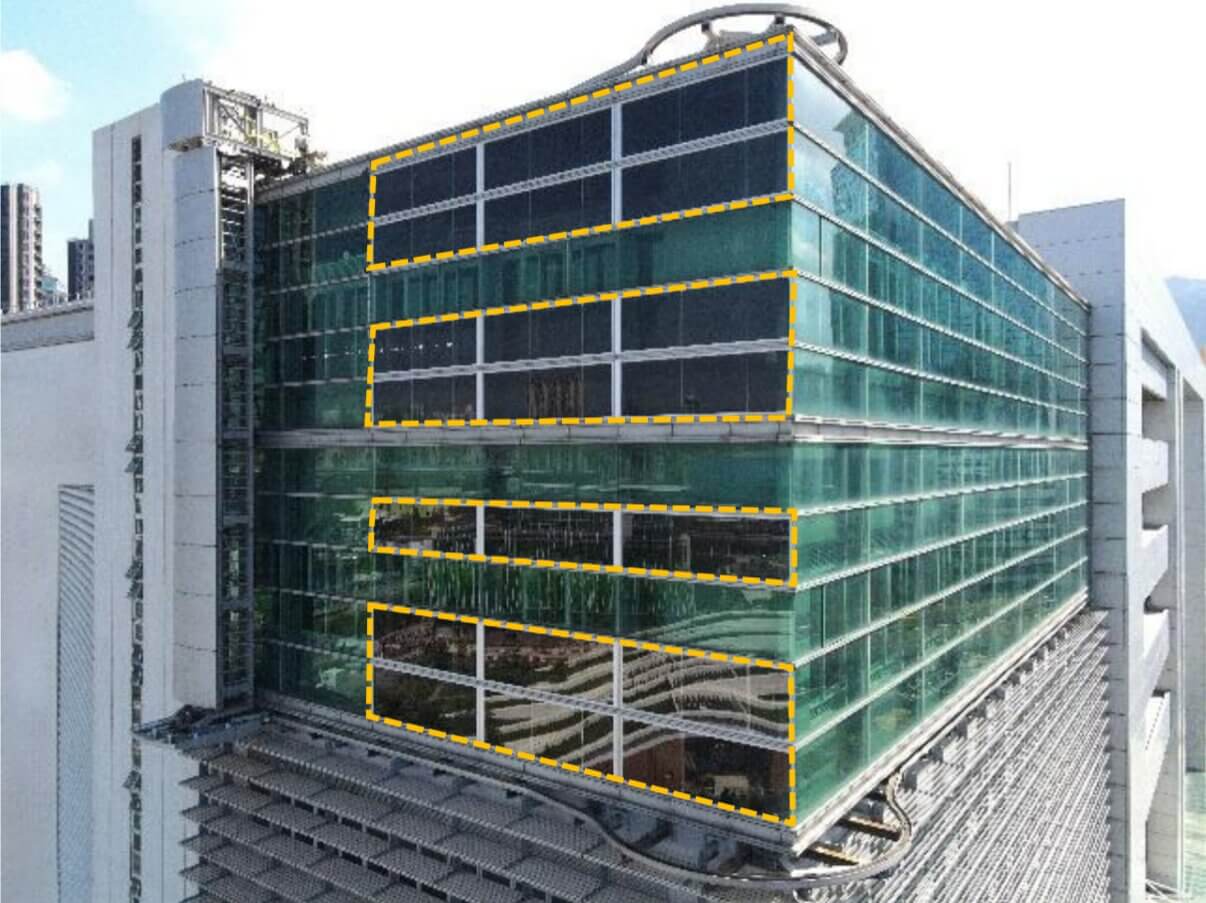
6/F-7/F Facades
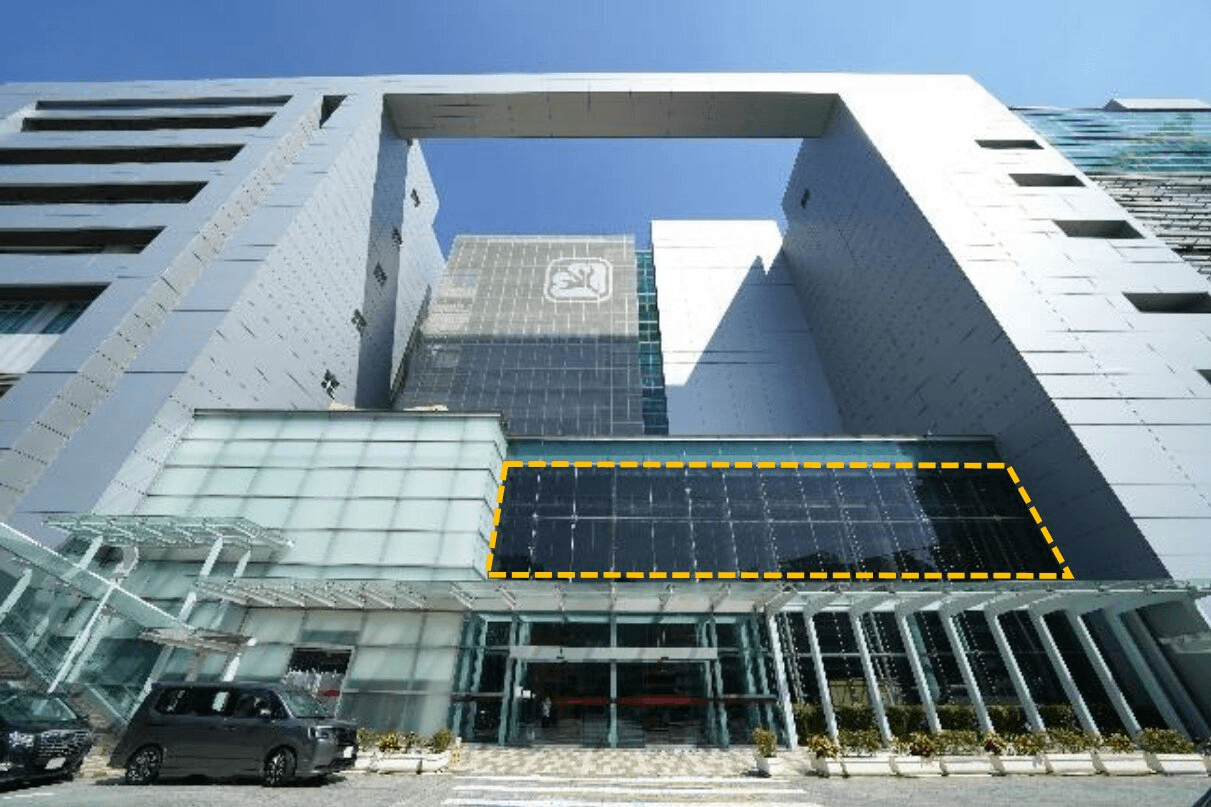
G/F Lobby
The total installed capacity of the BIPV system is 25 kW. With the installation works completed in July 2025, the system has now entered its trial operation phase, collecting data of one year for subsequent evaluation.
BIPV not only generates electricity and reduces carbon emissions, but also blocks sunlight, thereby cutting energy consumption by air conditioning while preserving scenic views. This technology can make our city greener and brings us closer to carbon neutrality.